Key takeaways
- Rot follows moisture.
- Probe suspicious wood with a screwdriver.
- Check window sills, door frames, fascia, decks and trim.
- Fix the moisture source, not just the wood.
What rot looks like
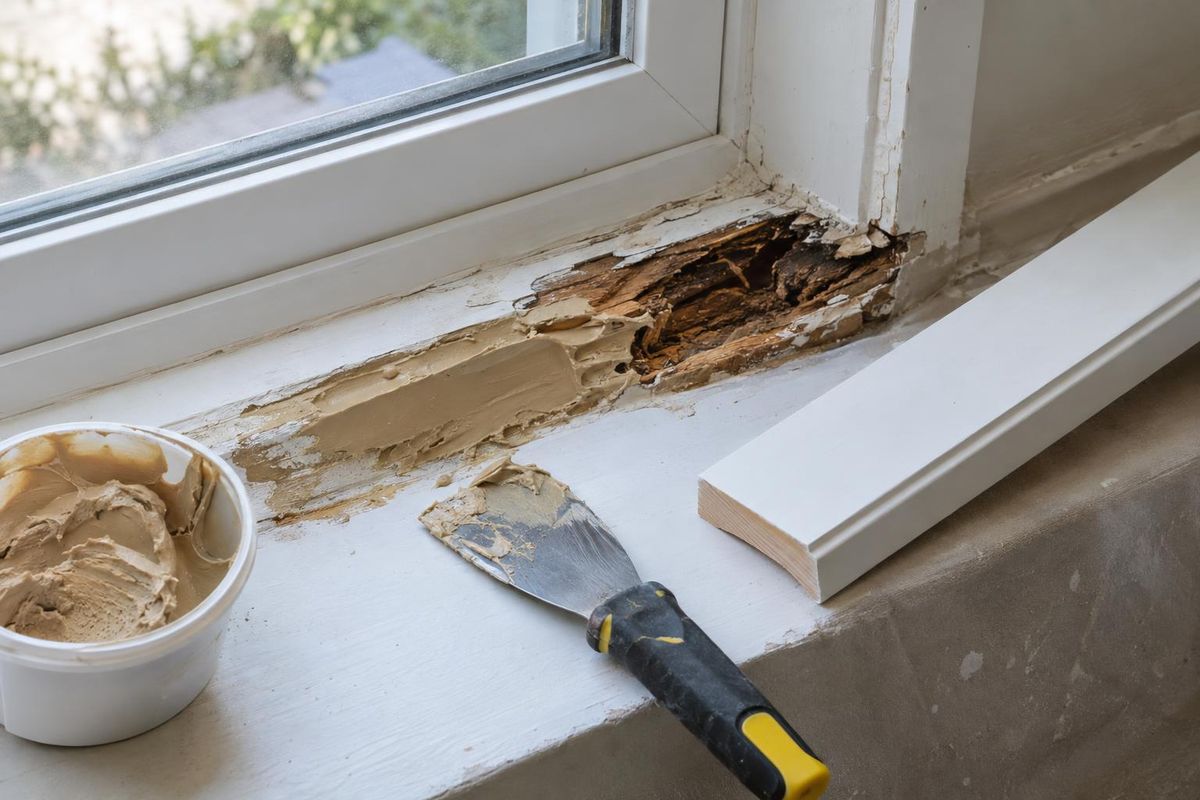
Wood rot shows as soft, spongy or crumbling wood, dark stains, peeling or bubbling paint, a musty smell and fungus growth. A screwdriver that sinks in easily is a sign.
Rot can hide under paint, so probing matters.
Where it hides
Check window sills and sashes, door frames and thresholds, fascia and soffit boards, deck boards and posts, siding near the ground and trim around bathrooms.
Anywhere water sits or splashes is a candidate.
Why it happens
Failed caulk and paint, clogged gutters, leaks, poor drainage and constant dampness all feed rot. Fixing the moisture source is the key.
Replacing wood without fixing the cause invites a repeat.
How it is repaired
Small damaged areas can be dug out and rebuilt with wood-hardening epoxy. Larger areas are cut out and replaced with new wood, primed and caulked.
Painting over rot only hides it.
Quick answers
Is wood rot dangerous?
It weakens structure, and structural rot should be checked promptly.
Can rot spread?
Yes, as long as moisture and wood are present.
Can you fix rot on a window sill?
Yes. See wood rot repair.