Key takeaways
- Remove old caulk before adding new.
- Choose caulk for the location: kitchens and baths, exterior, trim.
- Weatherstripping wears out and should be replaced.
- Clean, dry joints make caulk stick.
Why caulk matters
Caulk fills the gaps where different materials meet. When it cracks, water and air get in. Water leads to rot and mold, and air leads to drafts and higher bills.
It is one of the simplest and most effective small repairs.
Choosing caulk
Kitchen and bath joints need mildew-resistant, flexible sealant. Exterior joints need weatherproof sealants. Trim and walls can use paintable acrylic latex.
Read the label for the surface and the temperature range.
Applying it well
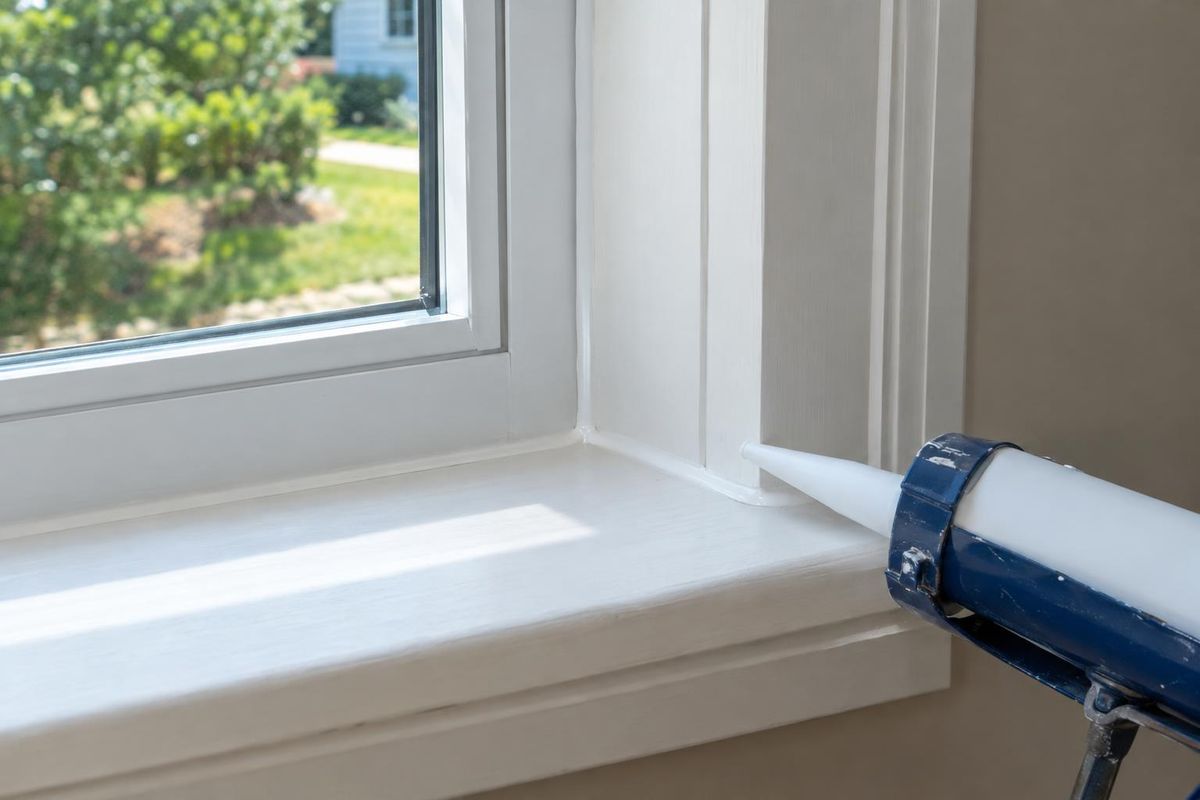
Cut out the old caulk, clean and dry the joint, apply a steady bead and smooth it with a damp finger or tool. Let it cure before water or paint.
Painter's tape makes crisp lines.
Weatherstripping
Door and window seals flatten and tear. Replace them with the right type for the gap. A door sweep stops drafts at the bottom.
Check seals every season.
Quick answers
How long does caulk last?
It depends on the product and the location, but cracked or peeling caulk should be replaced.
Can I paint over silicone?
Paint does not stick to silicone. Use paintable caulk where you plan to paint.
Why does bathroom caulk turn black?
Mildew grows in damp conditions. Remove it and use a mildew-resistant caulk.