Key takeaways
- Small holes need spackle. Larger holes need a patch.
- Thin coats and sanding make a patch disappear.
- Prime before painting so the patch does not show.
- Match the wall texture.
Small holes and nail pops
Nail holes and small dings take lightweight spackle and a putty knife. Fill the hole, scrape flat, let it dry, sand lightly and prime before painting.
Nail pops need the nail reset or replaced with a screw first.
Medium holes
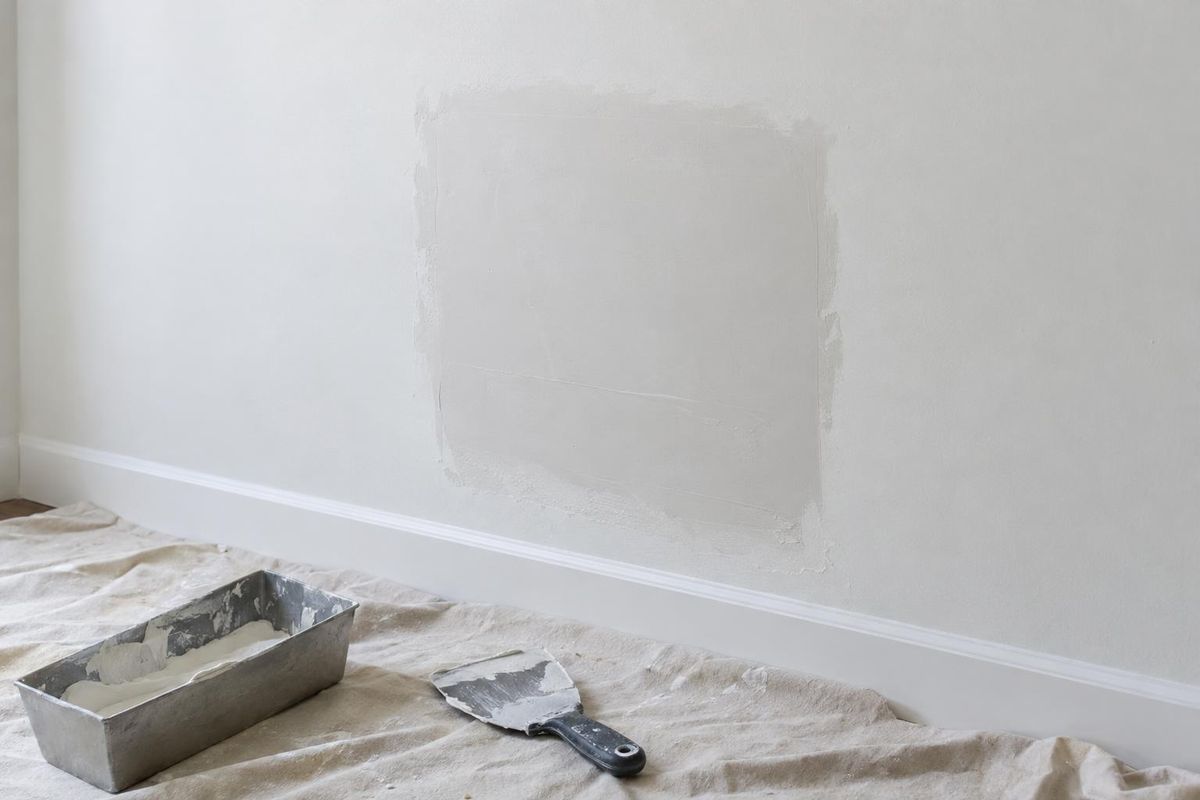
Holes up to a few inches need a self-adhesive mesh patch or a metal patch. Press it over the hole, cover it with joint compound in thin coats and feather the edges wide.
Let each coat dry before the next.
Large holes
Larger holes need a drywall piece cut to fit and secured to backing. Tape the joints and finish with several thin coats.
Take your time sanding.
Prime, texture and paint
Raw joint compound soaks up paint differently than the wall, so prime the patch. Match the texture with a roller or spray if the wall is textured.
Paint the whole wall section for a seamless result.
Quick answers
Why does my patch show through paint?
It was probably not primed, or the edges were not feathered wide enough.
Can I patch a water-stained spot?
Fix the leak first, then seal the stain with primer before patching.
Should I hire someone for drywall?
Small patches are DIY-friendly. Larger or textured areas are quicker with experience.